
When shopping for a water bottle rack, the material is one of the most important decisions you’ll make. The three most popular options on the market are stainless steel, carbon steel, and plastic—each with its own set of pros and cons. Understanding their unique traits will help you pick the best fit for your home and lifestyle.
Stainless Steel: Durability Meets Sleek Style
Advantages
- Aesthetically pleasing: Boasts a premium metallic finish that complements modern home decor
- Corrosion-resistant: Built to last with a long service life
- High structural strength: Excellent weight-bearing capacity for heavy 5-gallon jugs
- Easy to clean & low-maintenance: Wipes clean quickly with no stubborn grime buildup
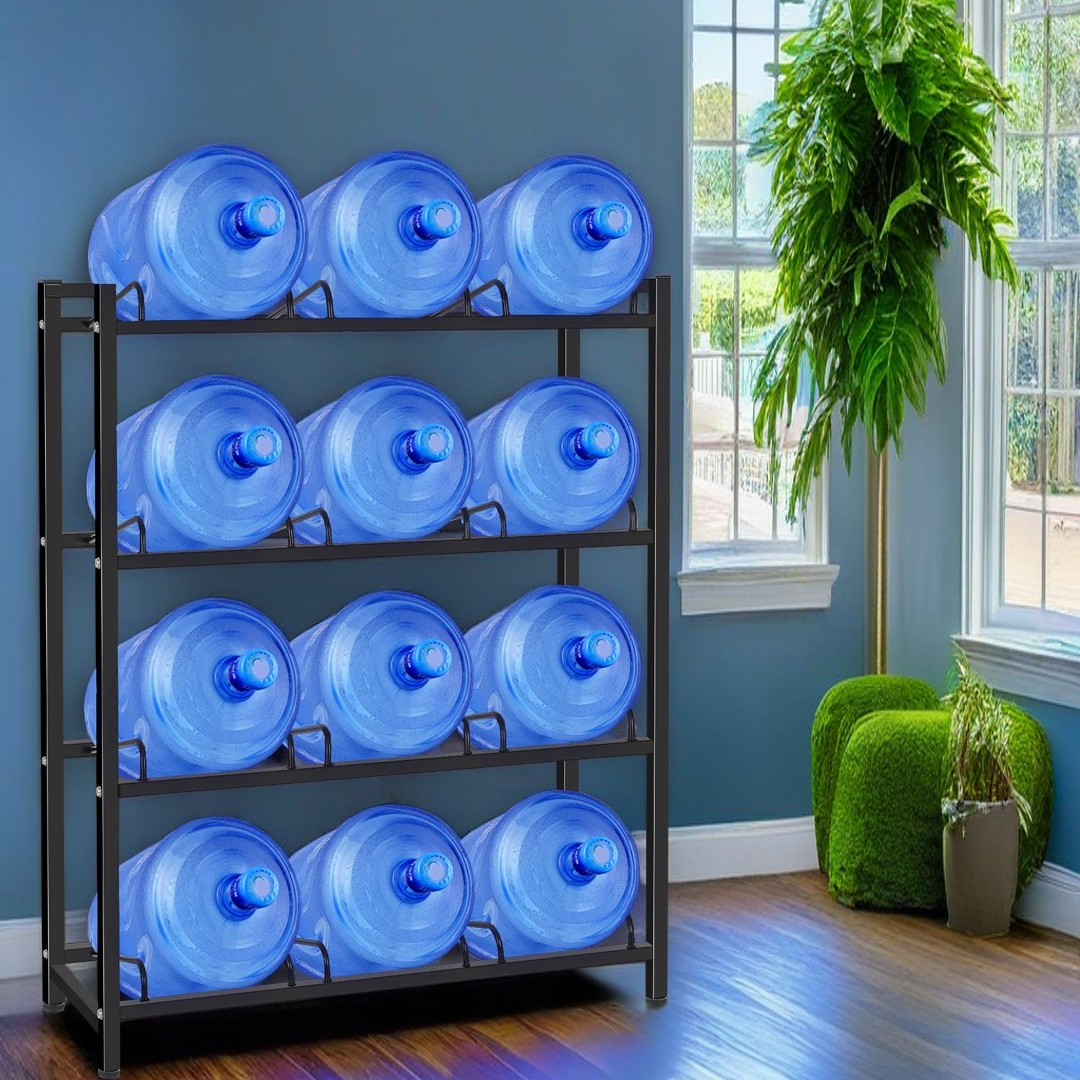
Disadvantages
- Higher price point compared to other materials
- Heavier weight, making it less convenient to move frequently
- Low-quality stainless steel may rust over time
Best For
Users who prioritize quality, have a flexible budget, and want a long-term, no-replacement solution.
Buying Tips
Choose 304 food-grade stainless steel with a thickness of at least 1.0mm. Check for a smooth, scratch-free surface finish.
Carbon Steel: The Budget-Friendly Workhorse
Advantages
- Mid-range price with outstanding value
- Exceptional strength and weight-bearing performance
- High malleability, offering a wide range of stylish designs
Disadvantages
- Prone to rust without proper surface coating
- Protective paint or plating can chip or peel over time
- Shorter overall lifespan compared to stainless steel
Best For
Budget-conscious users with dry indoor spaces, who don’t mind occasional replacement.
Buying Tips
Inspect for a uniform, bubble-free protective coating with no peeling areas. Ask about the anti-rust treatment process and expected durability lifespan.
Plastic: Lightweight & Ultra-Economical
Advantages
- Lowest cost option, highly affordable
- Ultra-lightweight for easy carrying and moving
- Rust-proof and moisture-resistant, ideal for damp spaces
- Wide variety of colors and designs to choose from
Disadvantages
- Weaker weight-bearing capacity compared to metal options
- Can warp, crack, or degrade with long-term use
- Low-quality plastic may leach harmful chemicals
Best For
Renters, students, budget shoppers, and anyone who needs to move the rack frequently.
Buying Tips
Only choose racks made from food-grade plastic with no chemical odors. Check for even wall thickness and a stable, sturdy structure.
Final Buying Recommendation
If your budget allows, go for stainless steel—it’s a one-time investment that delivers long-term value. For a balanced middle option, carbon steel works well, but be diligent about keeping it dry to prevent rust. If you need a temporary, portable solution, a high-quality plastic rack is more than sufficient.
No material is universally “better” than the others; the right choice depends entirely on your usage needs and budget.