
A professional guide for educational institutions on the safety standards of water dispenser bottle racks in school settings—covering selection criteria, installation requirements, and daily management.
Schools are crowded places, and drinking water safety is closely related to the health of teachers and students. Properly configuring water dispensers and bottle racks, and establishing a sound management system, are important parts of school logistics work.
Special Considerations for School Drinking Water Safety
School environments have the following characteristics: a wide age range of users, high population density, concentrated usage frequency, and heavy safety management responsibilities. These factors mean school drinking water facilities need higher safety standards.
Minors, especially students in kindergarten and primary school, have weak self-protection awareness, so the safety design of equipment is particularly important. Water bottle racks must have no sharp edges or corners, be absolutely stable, and be made of materials that meet food safety standards.
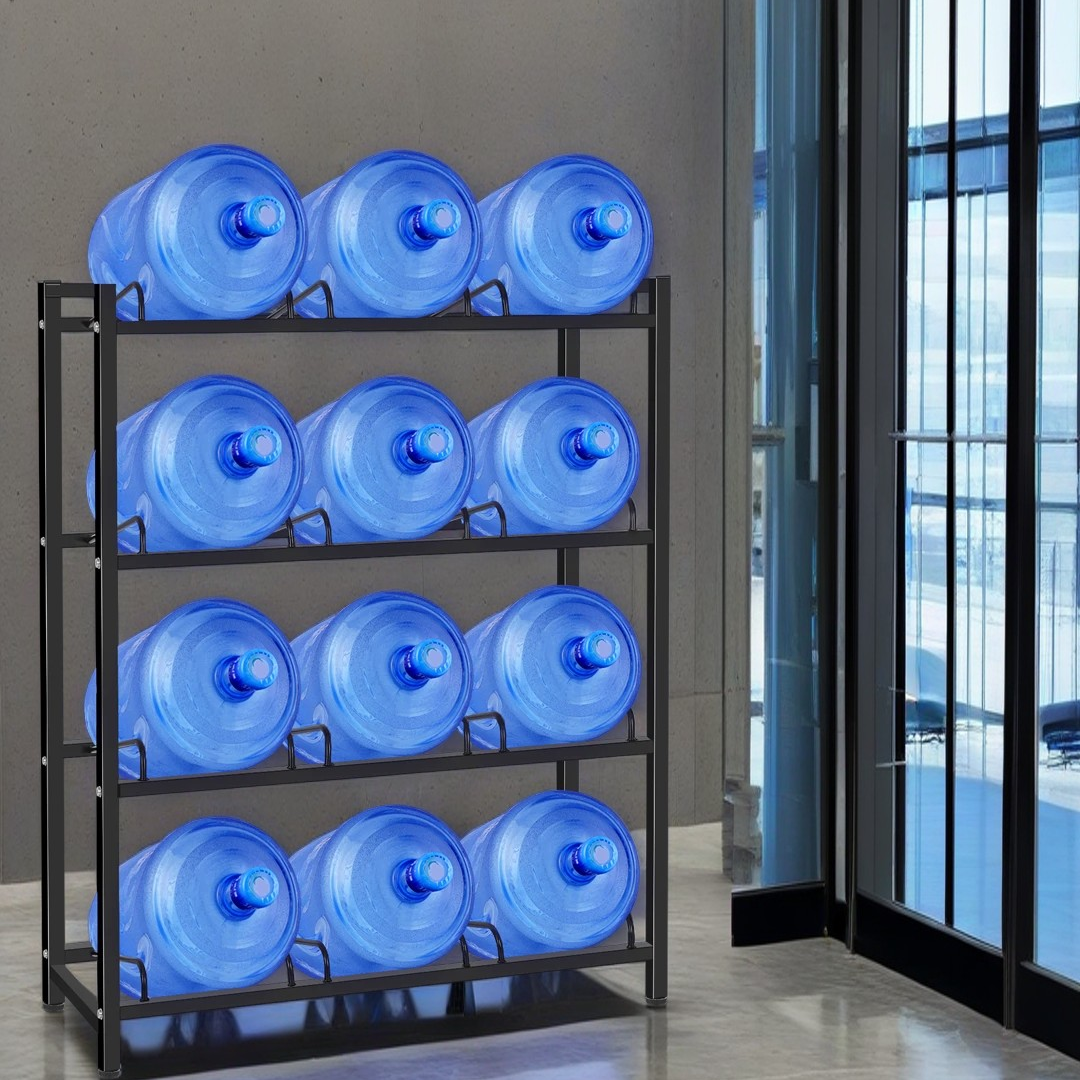
Water Bottle Rack Selection Standards
For school environments, water bottle racks should meet the following standards:
1. Safe Materials
- Must pass FDA food contact material certification
- No release of harmful substances
- Smooth surface with no burrs
HomStora water bottle racks are made of food-grade stainless steel, meet international safety standards, and are suitable for school use.
2. Stable Structure
- Wide, stable base with anti-tipping design
- Reasonable center of gravity, not easy to tip over when changing water jugs
- Weight capacity of at least 1.5 times the weight of a full water jug
3. Easy to Use
- Water jug changing height suitable for logistics staff to operate
- Smooth surface for easy cleaning and disinfection
- Non-slip bottom to protect the floor
Installation & Layout Requirements
Kindergartens & Primary Schools
Drinking water facilities should be placed within the teacher’s line of sight to avoid young children accessing water jugs alone. Water bottle racks should not be too low to prevent children from climbing on them.
Middle Schools & Universities
Drinking water stations can be set up in public areas such as corridors and canteens, but they need to be managed by special personnel or have a regular inspection system in place.
Suggestions for Management Systems
Establish a sound management system for drinking water facilities:
- Daily Inspections: Check the stability and cleanliness of water bottle racks every day
- Regular Disinfection: Disinfect at least once a week, and increase the frequency during peak periods of infectious diseases
- Equipment Maintenance: Inspect parts such as screws and foot pads every month, and replace damaged parts in a timely manner
- Usage Training: Provide safety use training for logistics staff
Emergency Response Plan
Develop an emergency response plan for drinking water facilities:
- Immediately stop using the equipment if it is loose or damaged
- Prepare backup water bottle racks to ensure uninterrupted water supply in emergencies
- Establish a supplier contact mechanism to respond quickly to maintenance needs
Summary
Drinking water safety in schools is no trivial matter. Choosing water bottle racks that meet safety standards and establishing a sound management system are the foundation for protecting the health of teachers and students.
HomStora provides professional-grade drinking water equipment solutions for schools, helping to create a safe campus environment.