
Buying a water bottle rack seems simple—it’s just a stand, right? But once you start shopping, you’ll quickly realize there are dozens of styles, with prices ranging from tens to hundreds of dollars. How do you choose without making a bad purchase?
As someone who’s tested multiple water bottle racks, I’ve rounded up the easy-to-miss but critical details that 90% of shoppers ignore. This guide will help you steer clear of common mistakes and pick the right product for your needs.
Detail 1: Don’t Only Trust the Listed Weight Capacity
Every product lists a maximum weight capacity, but that number is only a theoretical value. In real use, a full 5-gallon water jug with the container weighs roughly 20kg—and you also need to account for dynamic load: the impact of changing jugs, jostling, and long-term wear and tear.
My recommendation: Choose a rack with a listed capacity at least 1.5 times higher than your actual load. For a 15–20kg jug, a rack rated for 25kg or more is ideal. Leaving a safety margin ensures stability and peace of mind for daily use.
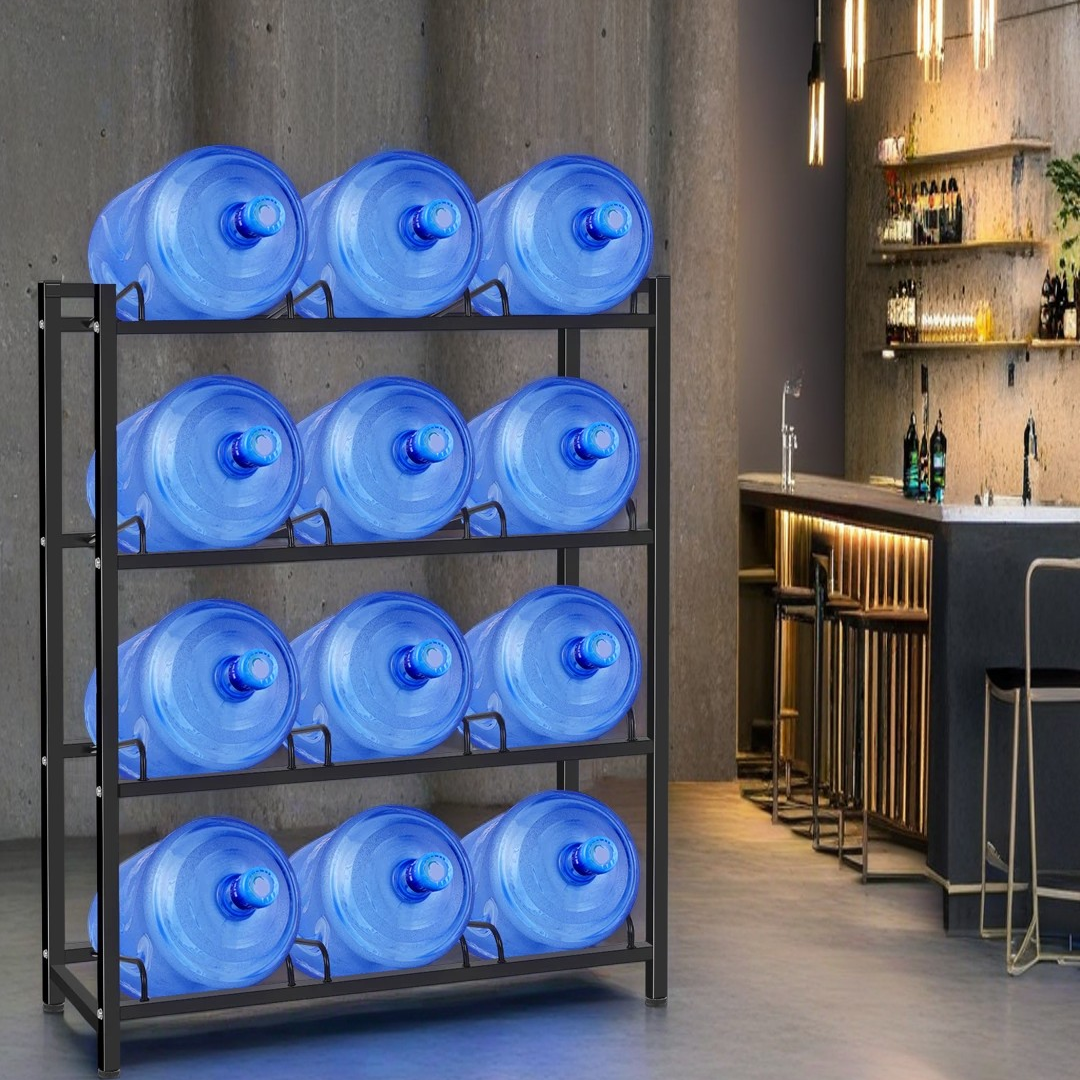
Detail 2: Bigger Size Isn’t Always Better
Many shoppers assume a larger rack is more stable, but the truth is size must match your space and daily habits.
- Height matters for usability: A rack that’s too tall makes jug changes hard for shorter users, while one that’s too short requires constant bending. A spout height of 80–100cm is the most ergonomic and versatile for most people.
- Footprint should fit your space: Go for a slim, narrow design for small apartments; larger spaces can accommodate wider models. Don’t forget to account for clearance—some racks have a small base but need extra room to open or access jugs easily.
Detail 3: Material Finishes Trump Material Type
Is stainless steel always better than plastic? Not necessarily. The quality of craftsmanship and finishing matters far more than the material itself.
For Stainless Steel Racks
Check the steel thickness and weld quality first. Thin, flimsy stainless steel is worse than sturdy, thick plastic. Look for smooth, even welds with no sharp burrs, gaps, or weak “cold welds” that can break under weight.
For Plastic Racks
Food-grade plastic is non-negotiable for drinking water safety. Inspect for uniform molding, no strong chemical odors, and rigid construction. Cheap, low-quality plastic can leach harmful toxins—never risk this for water storage.
Detail 4: Accessory Quality Defines Daily Experience
Most shoppers only focus on the rack frame and completely overlook accessories. But the quality of small parts—water taps, sealing gaskets, and non-slip feet—directly impacts how well the rack works long-term.
- The tap should turn smoothly and drip-free
- Sealing gaskets must be durable and resistant to cracking/aging
- Feet need strong grip to prevent sliding and shaking
These details are hard to judge in person, so rely on customer reviews—especially follow-up reviews and negative feedback—to spot recurring quality issues.
Detail 5: After-Sales Service Is Non-Negotiable
A water bottle rack isn’t a disposable item, but it’s not indestructible either. Over time, taps may wear out, gaskets may need replacing, or small parts may break.
Before buying, ask these key questions:
- Does the product come with a warranty?
- Can replacement parts be purchased separately?
- How fast is the after-sales response time?
These points seem minor now, but they become critical when you need repairs or replacements down the line.
Final Quick Tips
Don’t chase the lowest price blindly, and there’s no need to overspend on premium models either. The best rack is the one that fits your specific needs.
Measure your space ahead of time, map out your daily usage scenario, and compare multiple options. With these checks, you’ll end up with a reliable, practical water bottle rack that lasts for years.