
To all families focused on home safety, today we’re diving into a critical yet often overlooked topic: home emergency water storage. As a California resident who has lived through multiple natural disasters, I understand firsthand how important it is to “be prepared for any emergency.” After countless real-world emergency situations, the HomStora 5-Gallon Water Jug Rack has become an irreplaceable part of our family safety system, thanks to its thoughtful design and reliable performance.
The Painful Cost of Ignoring Water Storage Prep
Last hurricane season, our community faced a five‑day water outage. A neighbor recalled: “I had over a dozen jugs piled messily in the basement corner. When we desperately needed water, I found the three bottom jugs had warped and leaked from long‑term pressure, losing nearly 15 gallons of drinking water. To make things worse, I nearly got hit by falling jugs while grabbing them in the dim emergency lighting.”
This story is far from unique. According to data from the Federal Emergency Management Agency (FEMA), more than 60% of households have serious safety risks in their emergency water storage setup.
Core Advantages of a Professional Water Storage Solution
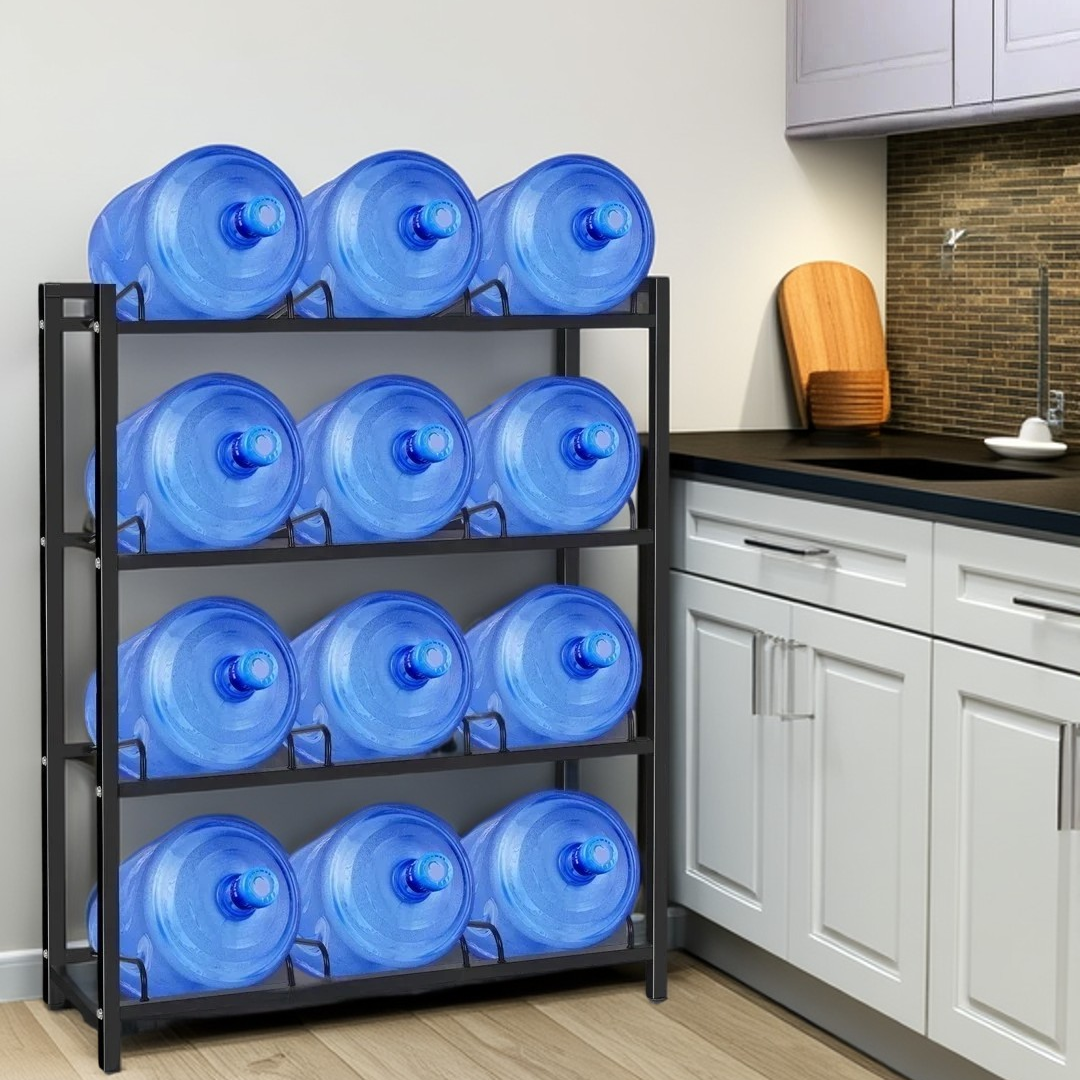
The HomStora rack provides the perfect answer to these problems. Its reinforced carbon steel structure is engineered with precision: each support point holds up to 50 pounds, with a total weight capacity of 500 pounds. It can safely store 10 standard 5‑gallon water jugs, for a total of 50 gallons of emergency water. As recommended by the American Red Cross, this amount meets the minimum three‑day drinking water needs for a family of four.
I especially appreciate its multi‑layer protective design:
- Shelves hold jugs 4 inches off the ground, effectively blocking ground moisture and preventing jug bottom corrosion.
- The X‑shaped rear reinforcing frame uses a triangular stability structure, staying steady even during earthquakes.
- Shelf spacing is precisely measured to leave proper ventilation space around each jug.
Step‑by‑Step Installation & User Guide
The assembly process is surprisingly straightforward. When Tom and I put ours together, we completed it in just four simple steps:
- Arrange the four main support columns in the marked order.
- Insert the 8 reinforced connectors and tighten them with the included wrench.
- Install the 5 storage shelves, each secured with a snap‑lock design.
- Finish by attaching the X‑shaped reinforcing frame.
No special tools or professional help are required, making it accessible for every household.
Pro Tips for Proper Emergency Water Storage
Correct storage practices are just as important as the right storage equipment. Here are the professional methods we follow:
- Label every jug with its filling date and strictly follow the “first‑in, first‑out” rule.
- Conduct a quick water quality check every month.
- Fully replace all stored water every six months.
- Keep dedicated water‑dispensing tools near the storage area.
Multi‑Scene Versatility
Beyond home use, the HomStora rack performs reliably in many other settings:
- Central water storage stations for community emergency centers
- Disaster supply warehouses in schools
- Emergency stock rooms for small businesses
- Water supply stations for outdoor campsites
Its galvanized finish delivers strong corrosion resistance, so it performs well in basements, garages and other challenging environments. The minimalist industrial design is both functional and stylish, blending naturally into any space.
Beyond Storage: Peace of Mind for Your Family
For anyone who prioritizes family safety, this rack offers value far beyond a typical household item. It is not just a storage solution — it’s a core part of a complete family emergency plan.
Knowing that we can quickly and safely access 50 gallons of clean drinking water in a crisis gives us a level of security that can’t be measured in money.
As the U.S. Department of Homeland Security advises, every household should prepare at least three days of emergency water. The HomStora rack makes it easy to meet this standard. More importantly, with its solid construction and user‑centered design, it turns emergency preparedness from a “burden you might need” into a “safety net you can trust.”